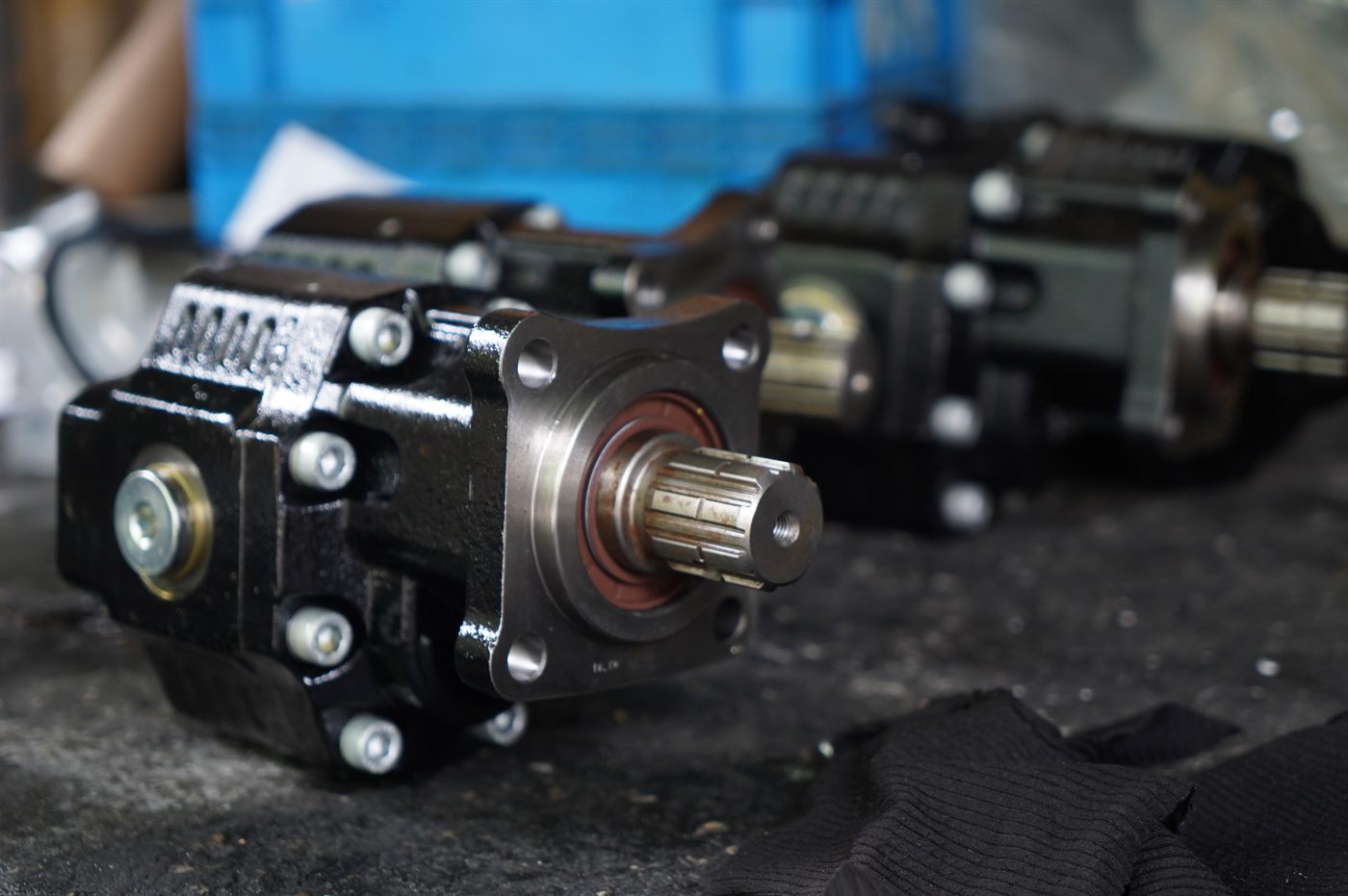
A hydraulic pump is the part that turns rotation into hydraulic power. It takes the turning motion it is given, draws oil out of the tank and pushes it into the system, and it is that moving oil under pressure that raises a dump body, swings a crane or drives a vacuum tank. On a truck the rotation comes from the engine, through the gearbox, through the PTO, and into the pump.
How much does the pump matter?
In a hydraulic system the pump is the heart. Nothing downstream of it does anything until it sends oil: the cylinder only lifts, and the valve only has something to direct, once the pump has delivered. So when a pump is worn or was sized wrong for the job, the symptoms turn up at the far end — slower lifting, more revs needed to get anything done, more noise, oil that heats up faster than it should — while the cylinder, the valve and the hoses are all still perfectly good.
It works because oil cannot be squeezed smaller. Push it into a closed space and the pressure spreads evenly in every direction, then acts on a piston with a much larger face, so the force coming out is many times the force going in. That is how a pump you can lift with one hand raises several tonnes of gravel.
The other thing to keep straight is that the pump does not create pressure by itself — it creates flow. Pressure appears when that flow meets resistance: the weight of the body, the load in it, the cylinder it has to move. The heavier the job, the higher the pressure climbs, up to the limit the relief valve is set to.
What sits around the pump
- Tank — holds the oil, lets it cool and lets air settle out of it
- Filter — catches the dirt that would otherwise wear the pump from the inside
- Pump — turns rotation into flow
- Control valve — decides where the oil goes, and holds the load when the lever is released
- Cylinder or motor — turns the oil back into movement
- Hoses and fittings — carry the oil, and are usually the first thing to leak if the wrong pressure rating is used
Pressure and flow are not the same thing
Two numbers describe what a pump gives you, and mixing them up is the most common mistake when choosing one.
| Flow | How fast the job happens — how quickly the body lifts. It comes from the pump size (cc per revolution) multiplied by how fast it is turning. |
|---|---|
| Pressure | How heavy a load the system can move. It is set by the load itself and capped by the relief valve, not by the pump size. |
So a bigger pump does not lift more — it lifts faster, and asks more of the engine while it does. Choosing a pump means matching the cc to the speed the job needs, not picking the biggest one available.
Where a truck pump gets its power
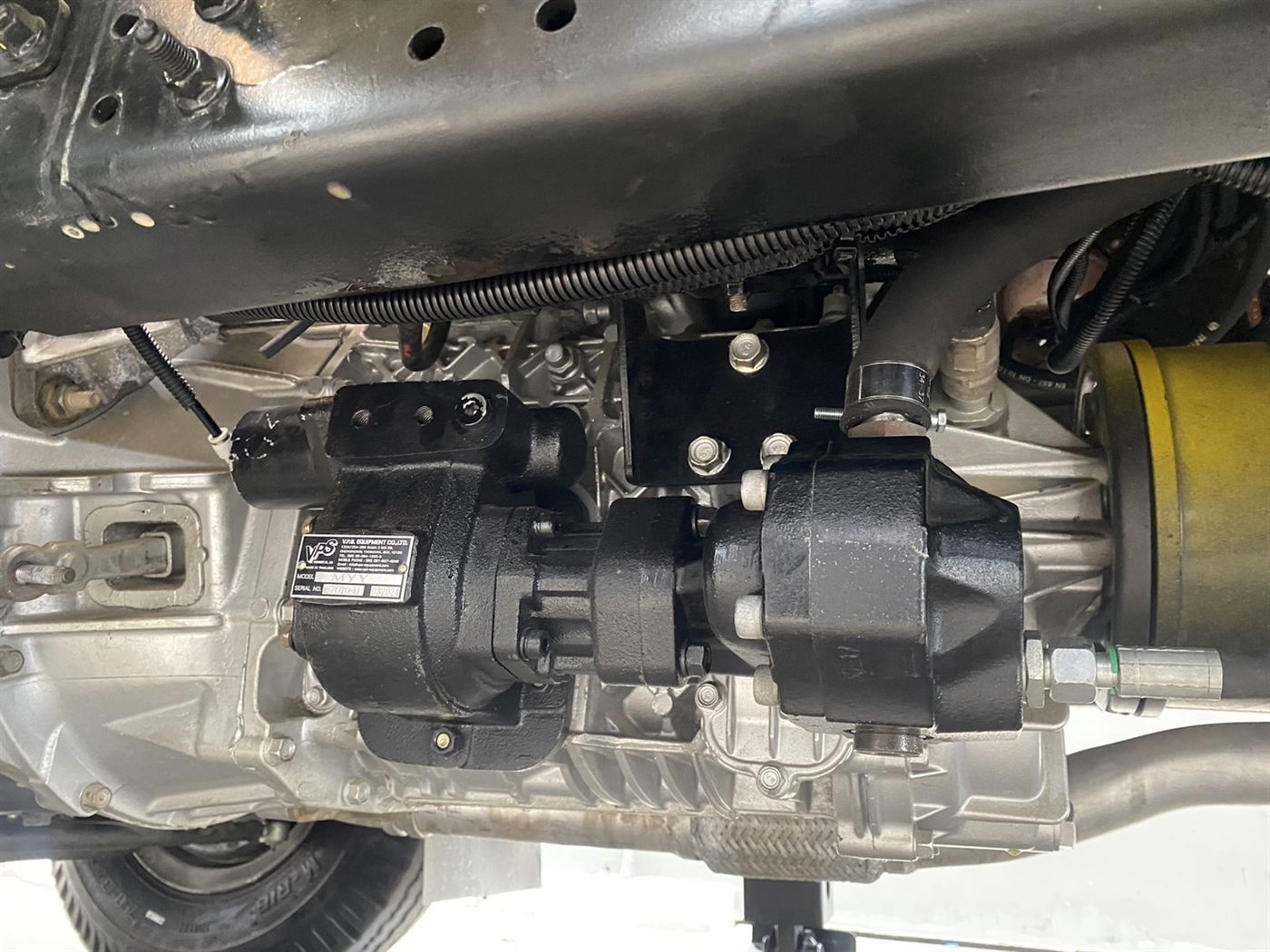
In a factory a hydraulic pump is usually turned by an electric motor. A truck has no such motor, so the power is taken from the engine through the gearbox — that is what a PTO is for. It bolts to an opening in the side or the rear of the gearbox, takes a share of the rotation when the driver engages it, and hands it to the pump.
On a truck, then, the PTO and the pump are never really separate purchases — they come as a set. The PTO decides how fast the pump turns and what flange it bolts to; the pump decides how fast the equipment moves. Change one without looking at the other and the two usually end up mismatched.
How it works, step by step
Think of a pressure washer
A motor turns a pump, the pump draws water out of a bucket and pushes it down the hose, and the pressure only appears at the end, where the narrow nozzle stops the water getting away. A truck is the same story with bigger parts: the motor is the truck engine, the water is hydraulic oil, and the nozzle is the cylinder that has to lift a loaded body.
- The engine turns the gearboxAs long as the engine is running, the shafts inside the gearbox are turning. Nothing hydraulic has happened yet.
- The PTO taps off some of that turningThe PTO bolts onto an opening in the side of the gearbox and takes a share of the rotation — but only when the driver engages it. Leave the switch alone and nothing downstream turns.
- The pump draws oil upThe PTO turns the pump shaft, and the pump pulls oil out of the tank through a filter, the same way you draw a drink up a straw.
- The pump pushes the oil outThe oil is pushed into the pressure line. While it can keep flowing freely the pressure stays low; the moment something heavy stands in its way, the pressure starts to climb.
- The valve decides where it goesWhen the operator moves a lever or presses a switch, what they are really doing is telling the control valve which cylinder or motor to send the oil to.
- The oil does the work, then goes homeThe oil pushes the cylinder that raises the body, tips the load or swings the crane, then runs back down to the tank to cool off and is drawn up again. It goes round like that for as long as the PTO is engaged.
Stop the rotation at any point in that chain and everything downstream stops: disengage the PTO and the pump stops turning, and the body stays where it is.
Two ways the pump is mounted
Which one a truck gets depends on how much room there is beside the gearbox and what the pump has to drive.
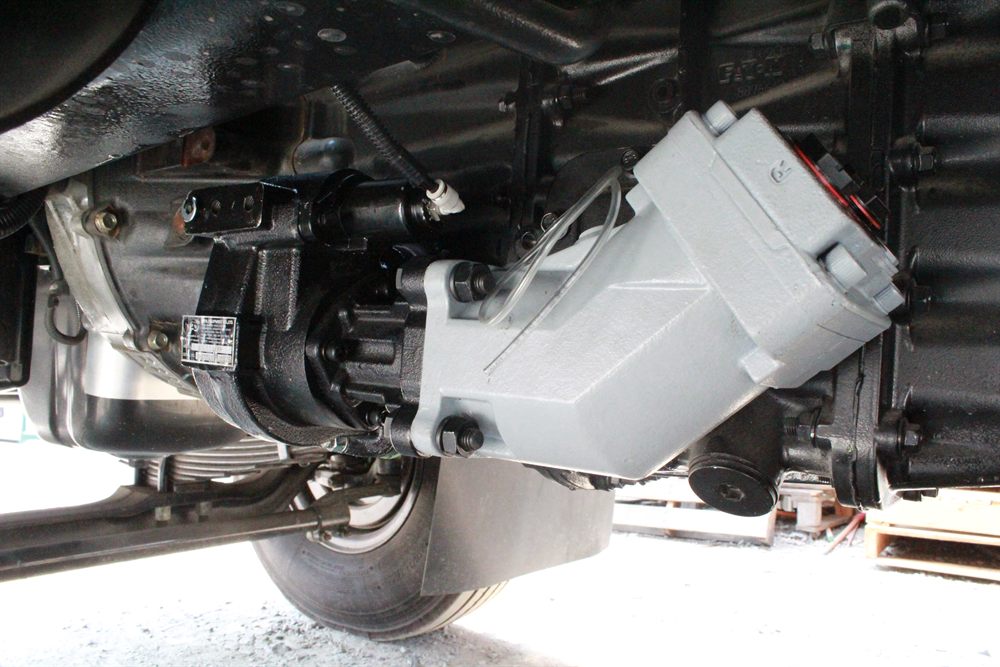
Direct mount
The pump bolts straight onto the PTO output flange. Short, simple, nothing in between to wear — the usual choice when there is room.
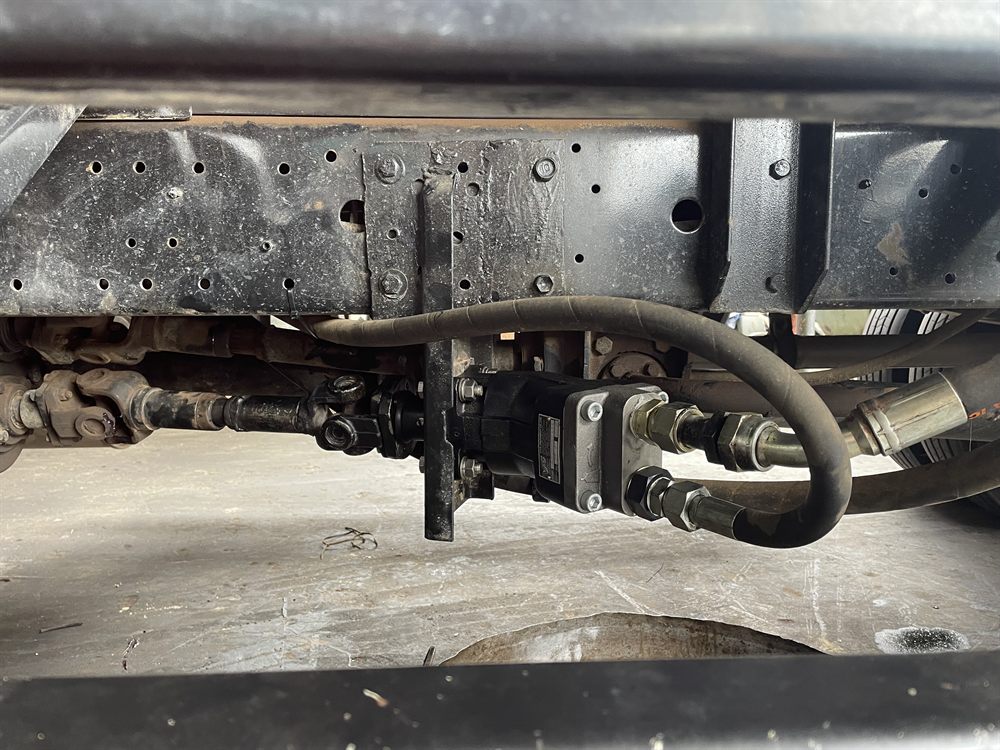
Remote mount
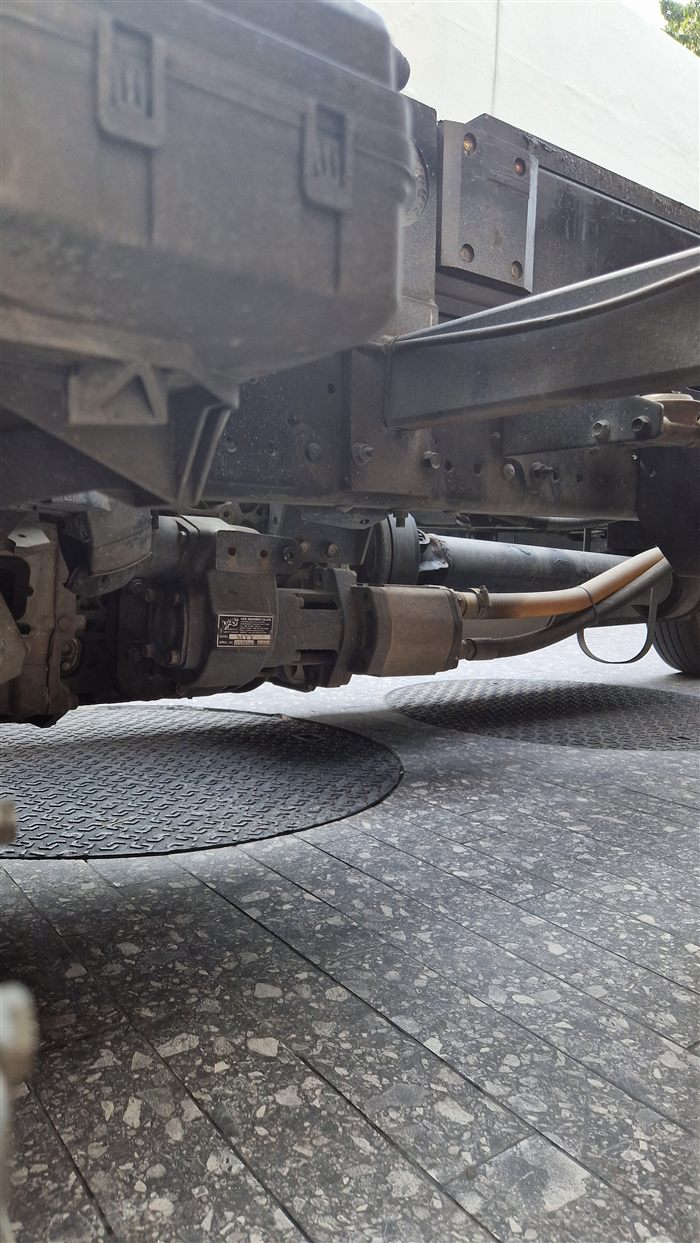
The pump sits on the chassis and a short driveshaft connects it to the PTO. Used when the gearbox area is crowded, or when the pump needs to be somewhere easier to service.
Frequently asked
Does the pump work while the truck is moving?
On an ordinary gearbox PTO the truck has to be stationary with the gearbox in neutral, because the PTO and the road drive share the gearbox. A split shaft PTO is the exception: one type keeps the axle driven so the equipment can run while the truck moves.
Why does the engine have to be revved for the equipment to work?
Flow depends on how fast the pump turns, so more revs means faster movement. If the pump is sized correctly for the job you should not need much throttle — a pump that is too small is the usual reason for having to rev hard.
Can I fit a bigger pump to lift heavier loads?
No. A bigger pump lifts faster, not heavier. How heavy a load the system can move comes from the pressure the system is set to and the size of the cylinder.
What kills a hydraulic pump fastest?
Dirty oil and a neglected filter. Grit circulating through the system wears the internals from the inside, and the pump is usually where the damage shows up first. Running low on oil comes second, because the pump draws air instead.
Which pump does my truck need?
It follows the mounting on your PTO output and the flow your equipment needs. Count the bolts on the flange — three is UNI, four is ISO, two is SAE — and tell us what the pump has to drive.