
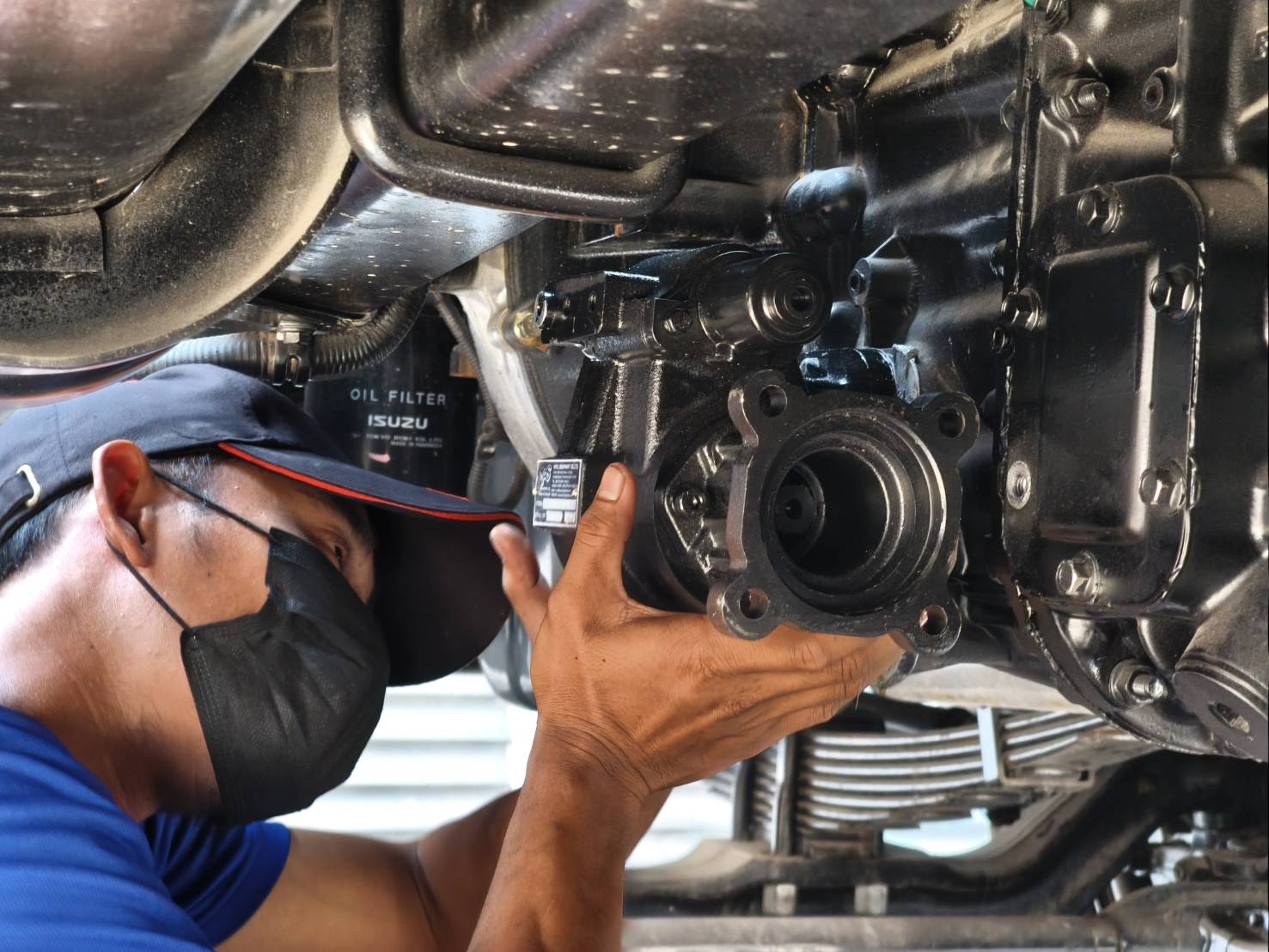
A Power Take-Off is built to run for years with minimal attention — but minimal is not none. In the field, most PTO failures trace back to a missed inspection rather than a manufacturing fault: a shaft that ran dry too long, a mounting bolt that loosened unnoticed, or a shift mechanism that was never re-adjusted after its first months of wear-in. A simple routine, matched to how hard the unit works, is what keeps a PTO reliable for the life of the truck.
Match the schedule to the duty cycle
There is no single interval that fits every PTO, because how hard a unit works varies enormously by application. A PTO that engages briefly and infrequently — a dump truck tipping its load a few times a shift — runs under normal duty. A PTO that stays engaged for long stretches, such as driving a concrete mixer drum or a continuous-duty blower, runs under severe duty and needs closer attention and shorter intervals between checks. Before setting a maintenance calendar, know which category your application falls into — and when in doubt, treat it as severe duty and check more often rather than less.
Weekly and pre-trip checks
- Look for oil leaks around the PTO housing, output shaft seal, and any hose or fitting connections
- Listen for whining, knocking, or grinding while the PTO is engaged — noise is usually the earliest warning sign of gear or bearing wear
- Check that mounting bolts are still torqued — vibration works fasteners loose over time
- Confirm the engagement mechanism (cable, air cylinder, or electric shift) moves smoothly and engages fully, with no delay or partial engagement
Periodic service tasks
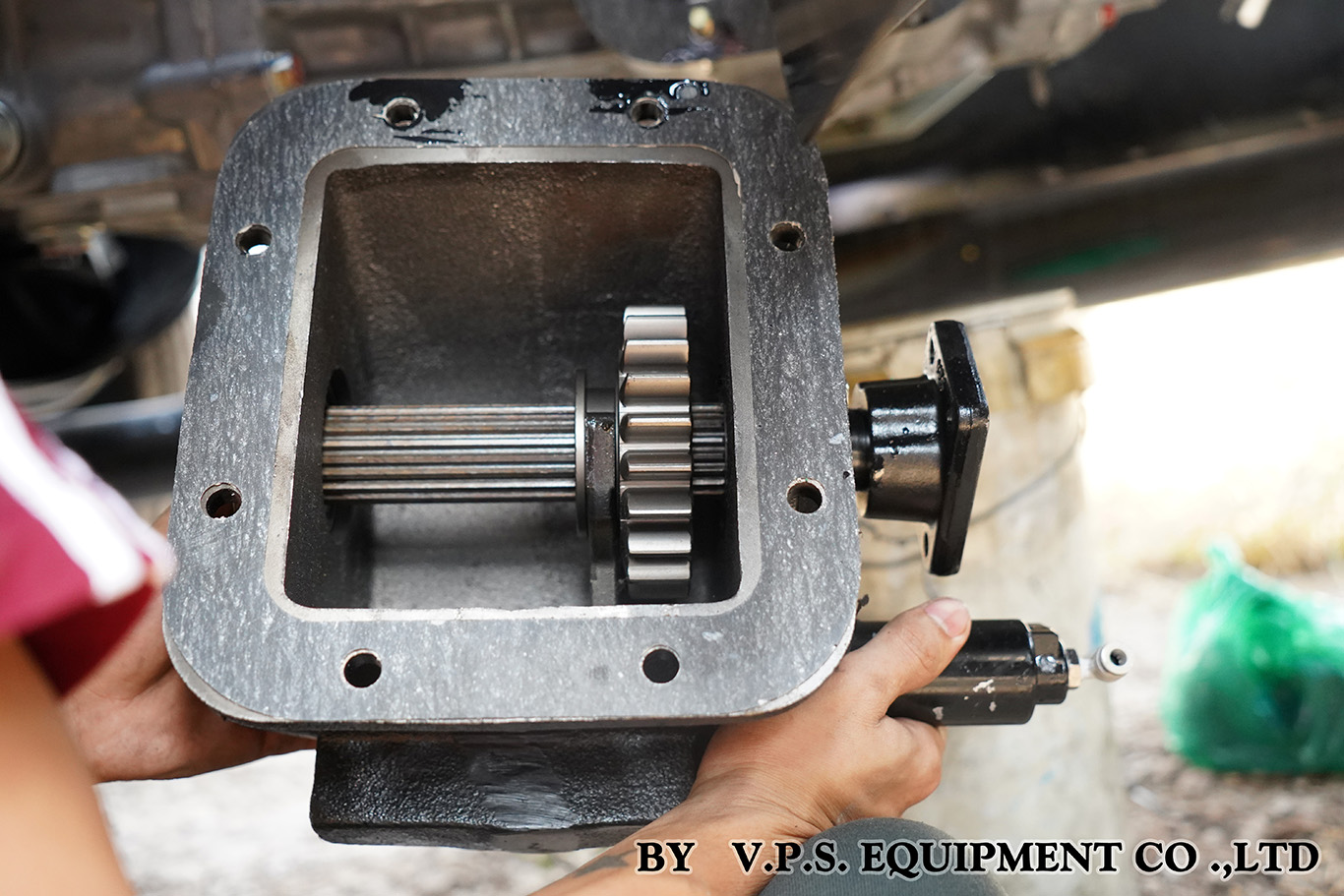
- Gear oil condition — check the level and condition at each preventive maintenance visit, and top up or replace according to your PTO's oil specification. Units in severe duty need this done more often.
- Shaft and coupling — the driveshaft connecting the PTO to the driven pump should be greased and its alignment checked periodically; a misaligned or dry shaft is one of the most common causes of premature PTO wear.
- Engagement adjustment — cable-shift and air-shift mechanisms wear in and often need re-adjustment after the first few months of service, then periodically after that.
- Seals and gaskets — a slow oil weep at the shaft seal or housing gasket is easy to ignore but becomes a bigger repair if left unaddressed.
The filter and everything the PTO drives
A PTO rarely fails on its own. Most of the units that come back to us were taken down by something they were bolted to — dirty oil, a blocked filter, or a pump that seized. The PTO sits between the truck’s gearbox and the equipment, so trouble on either side travels through it.
- Change the hydraulic filter on schedule — a filter left too long blocks up, oil bypasses it unfiltered, and the grit that should have been caught circulates through the pump and back into the system. Cheap part, expensive consequences.
- Watch the oil itself — milky oil means water, a burnt smell means it has been running hot, and glitter in the oil means metal is already coming off something. Any of the three is a reason to find the cause before the next job, not after it.
- Keep the tank topped up and the breather clean — a low tank lets the pump draw air, which damages the pump and heats the oil; a blocked breather cap pulls dirt in as the level moves.
- Treat a struggling pump as urgent — a pump that whines, runs hot or has lost pressure is on its way out. If it seizes while the PTO is engaged, the load goes straight back through the PTO gears and into the truck’s own gearbox, and a pump repair turns into a gearbox repair.
- Check hoses, fittings and the driveshaft to the pump — a leaking hose or a shaft out of alignment puts load where it does not belong and shows up as PTO noise or vibration.
Warning signs that need immediate attention
- A sudden increase in noise or vibration when the PTO is engaged
- Delayed or incomplete engagement, or engagement that requires extra force
- Visible oil leakage, or a noticeable drop in oil level between checks
- The PTO housing or driven pump running noticeably hotter than normal after a typical duty cycle
- A pump that whines, runs hot, or has lost pressure — stop and check it before it seizes.