
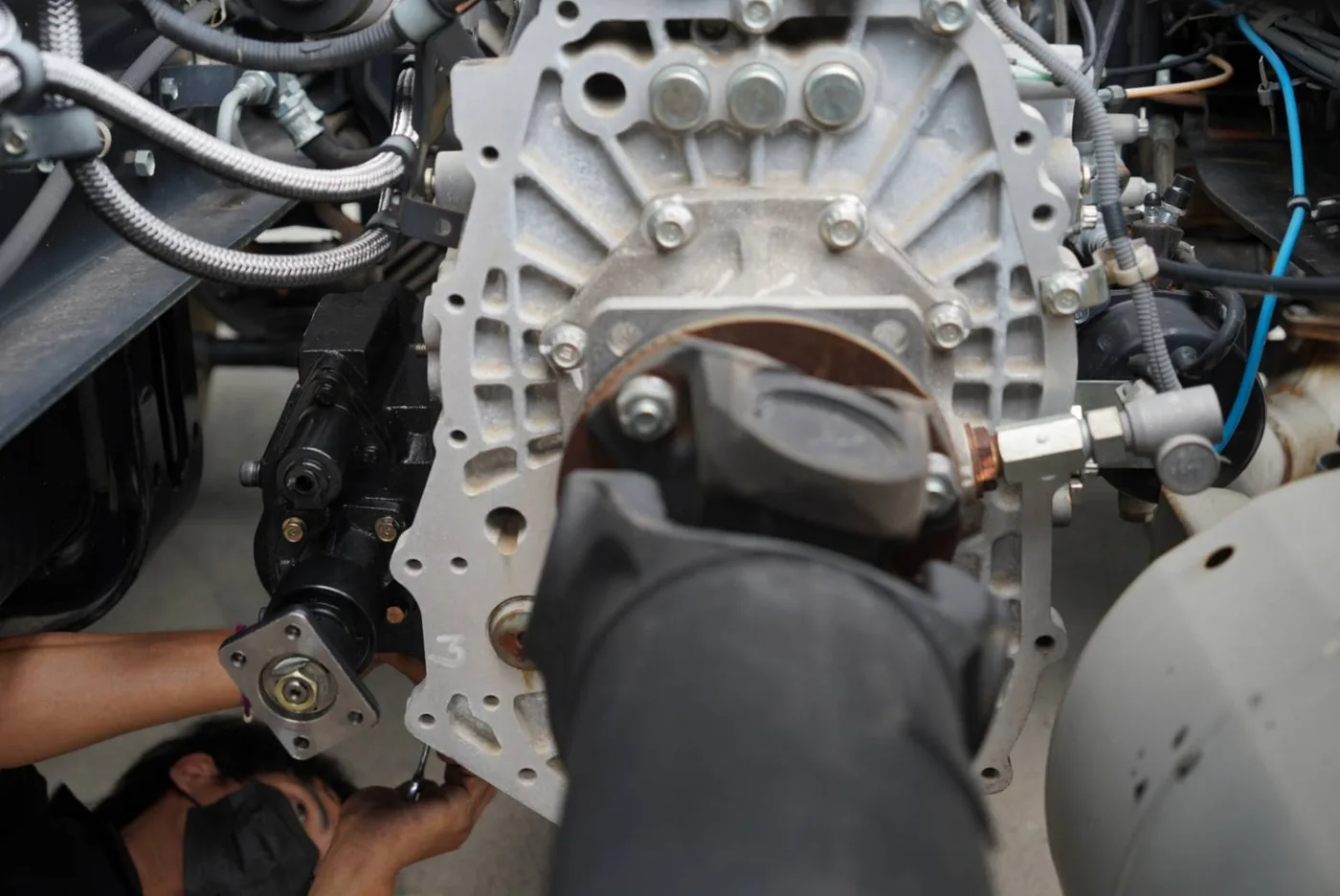
Every PTO needs a way to be shifted into and out of gear from the cab. That mechanism — the shift, or engagement, type — is one of the things you choose when you order a unit, and it has to suit the transmission and the systems the truck already has. VPS builds four of them.
The four ways a PTO is engaged
- Cable shift — a cable runs from a lever in the cab to the shift fork on the PTO, and the driver pushes the gear into mesh by hand. Nothing electrical or pneumatic can fail, so it keeps working on a truck with no spare air, and it is the type we fit most often. In exchange, the driver has to feel for full engagement, and a kinked, stretched or badly routed cable will not shift all the way.
- Air vacuum shift — a switch in the cab opens a valve and vacuum pulls the shift cylinder, moving the gear into mesh. It suits light and medium trucks that have a vacuum source rather than an air-brake supply; in our range it is the usual choice on Canter, Dutro, NPR and NKR-class units.
- Air pressure shift — the same idea the other way round: the switch feeds compressed air from the truck’s air system to a cylinder that pushes the gear into mesh. It is the natural choice on trucks that already run air brakes, and engagement is quick and repeatable. It does depend on having enough pressure — a PTO that engages slowly or not at all is often an air-supply problem, not a fault in the unit.
- Electric shift — a solenoid on the PTO acts directly on the shift fork, switched from the cab. It is used where there is no air to tap and the installer would rather not run air lines to the unit; the trade-off is an electrical actuator that has to be kept dry and free of corrosion.
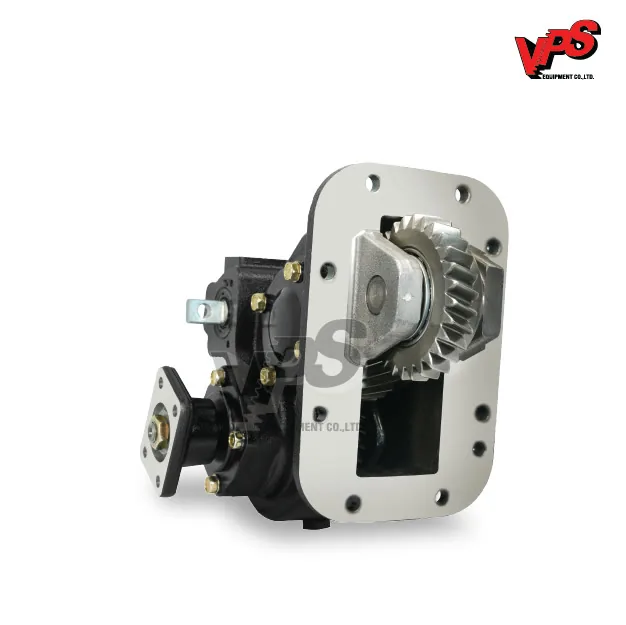
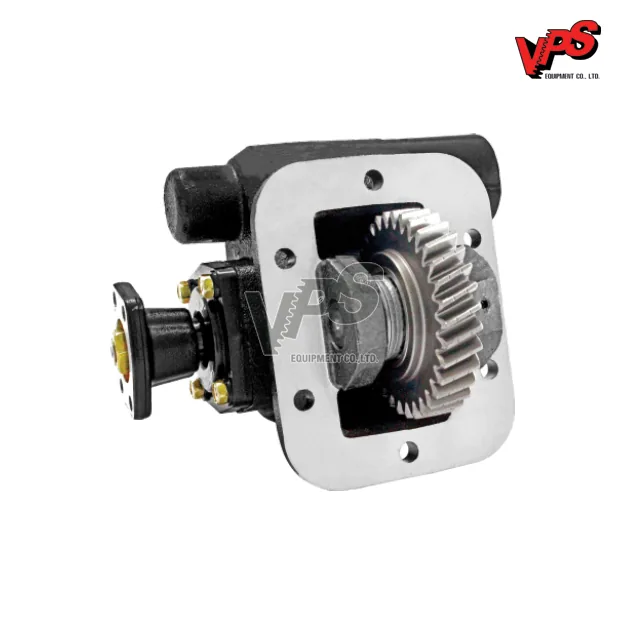

Side by side
| Shift type | What the truck needs | Best suited to | Watch out for |
|---|---|---|---|
| Cable | Nothing — a cable run to the cab | Any truck; the simplest, most common fit | Cable routing, wear and stretch |
| Air vacuum | A vacuum source | Light and medium trucks (Canter, Dutro, NPR, NKR class) | Leaking hose or a tired diaphragm |
| Air pressure | Air-brake supply | Trucks with air brakes; frequent, repeated engagement | Low air pressure slows or blocks engagement |
| Electric | 24V supply and a switch | Trucks with no spare air | Water and corrosion at the actuator |
Which one suits your truck
- Start with what the truck already has — air brakes make air pressure the easy answer; a light truck with a vacuum source takes vacuum shift; neither, and cable or electric is the way.
- Think about how often it is used — a tipper engaged a few times a day is happy on cable; a mixer, sweeper or vacuum truck engaging all day is easier on the driver with air.
- Think about the driver — air and electric engage at the flick of a switch and give the same result every time, while cable depends on feel but still works when the electrics or air do not.
- Think about where the truck works — water, mud and salt reach the actuator and its hose or wiring, whichever type you pick, so it needs protecting.
Before you engage it — every time
Whatever the shift type, the gears have to be still before they can mesh: clutch in, transmission in neutral, and wait for the gears to stop. Engaging against turning gears chips the teeth, and it is one of the most common reasons a PTO or a gearbox is opened up early. It is the one habit that decides how long the unit lasts.
Frequently asked questions
What is the difference between vacuum shift and air pressure shift?
Both are air-operated and switched from the cab. Vacuum pulls the cylinder to engage and suits light and medium trucks with a vacuum source; air pressure pushes it with compressed air from the air-brake system, which is what heavier trucks have.
My truck has no air. What can I use?
Cable shift, or electric shift if you would rather have a switch in the cab than a lever. Both work without any air on the truck.
Is cable shift out of date?
No — it is still the type we fit most often. It has nothing electrical or pneumatic to fail, it is the cheapest to install and repair, and on a truck that engages the PTO a few times a day it does everything air shift does.
Can the shift type be changed later?
Sometimes, and it depends on the model: some units take a different shift mechanism on the same body, others do not. Send us the PTO model and we will tell you whether it can be converted or whether a different unit is the better answer.