
The control valve is the part of a truck hydraulic system the operator actually touches. The PTO turns the pump, the pump moves oil, and the valve decides where that oil goes — into the cylinder to raise the body, held still so the load stays where it is, or back to the tank. Choose it wrongly and the symptoms look like a pump fault: a body that will not lift, a load that creeps down on its own, oil that is too hot to touch after half an hour.
Where the valve sits, and what P, A, B and T mean
A truck hydraulic circuit is a loop. Oil leaves the tank, the pump raises its pressure, the valve routes it, the cylinder does the work, and the oil returns to the tank to cool. The valve is the only part of that loop with a decision to make.
Those four letters are a standard, not a brand convention. P is the pressure port, where the oil arrives from the pump. A and B are the work ports: on a cylinder they go to the two ends of it, and on a hydraulic motor they decide which way it turns. T is the tank port, where the oil goes home.
This is also how a valve gets a name like 4/3. The first number is the ports — four of them, P, A, B and T. The second is the positions the valve can be put in — three of them, which on a tipper are raise, hold and lower.
What a spool is
Inside the valve body is a machined steel rod that slides along a bore. That rod is the spool. It is turned down to a set of lands and grooves, and as it slides, the grooves line up with different ports. Nothing else inside the valve moves. Everything the valve does, it does by sliding that one rod a few millimetres.
One spool controls one function. If the truck has to do two things independently — raise the body and open the tailgate — it needs two spools, and they are usually built into one valve body as two sections side by side.
Count the functions, not the cylinders
There is no formula for how many spools you need. You count the things the operator must be able to work on their own. Two cylinders that always move together take one spool between them; two that must move independently take one each.
| What the truck does | Spools |
|---|---|
| Tipper or dump body, nothing else | 1 |
| Dump body plus a hydraulic tailgate | 2 |
| Hooklift or skip loader | 2 |
| Crane: boom, slew and winch | 3 |
| Crane with extension and outriggers | 5 and up |
It is worth buying one spare spool. Adding a section to a valve that was built for three is not a five-minute job, and the price difference between a three-section and a four-section valve is small next to the cost of changing it later.
One number does matter here. Every spool has to pass the full flow of the pump, because the oil goes through the sections in turn. A valve rated for 40 litres a minute on a pump that delivers 60 will not simply run slower — it will drop pressure across itself and turn the difference into heat.
Size the valve to the pump, not to the truck
Two numbers decide the valve: the flow the pump delivers, in litres per minute, and the working pressure of the system, in bar. Both belong to the pump and the cylinder, not to the badge on the truck. A 6-wheel tipper and a 6-wheel crane truck can be the same chassis and need quite different valves.
Take the valve's rated flow at or above the pump's output, and its rated pressure above the system's working pressure. If you do not know what the pump delivers, our article on sizing a hydraulic pump for a dump truck works through how flow and pressure are arrived at in the first place.
Oversizing the valve costs money and nothing else. Undersizing it costs pressure, speed and oil temperature, and the part that usually fails first is the pump rather than the valve.
Open centre or closed centre — the one that catches people out
A PTO drives a fixed-displacement gear pump. Fixed displacement means it moves the same amount of oil for every turn it makes, and it cannot be told to stop. While the PTO is engaged, that oil is moving whether or not anyone has touched a lever.
An open centre valve is built for exactly that. In the middle position it joins P straight through to T, so the oil goes round the loop at almost no pressure and the pump is barely working. A closed centre valve blocks P in the middle position instead, which suits a variable-displacement pump that can reduce its own output to nothing.
Put a closed centre valve on a fixed gear pump and the oil has nowhere to go the moment the lever is released. Pressure climbs to the relief setting and stays there, every litre the pump moves is turned into heat, and within half an hour the oil is too hot for the seals. The pump is the part that fails, and the valve is the reason.
Almost every valve fitted to a PTO-driven truck is open centre, which is why the question rarely comes up and why it is so expensive when it does. If you are buying a valve from a catalogue rather than from a truck supplier, check this one line before anything else.
The relief valve, and what to set it to
Every control valve has a relief valve built into it. It is a pressure ceiling: when the system reaches the setting, it opens and sends oil back to the tank instead of letting pressure keep climbing. It is what stops a cylinder at the end of its stroke from bursting a hose.
Set it below the lowest-rated part in the circuit — usually the cylinder or the hoses, not the pump. And resist the most common temptation on site: winding the relief up because the body rises too slowly. Pressure does not control speed. Flow controls speed, and flow comes from the pump. All a higher relief setting does is let the system push harder on parts that were never rated for it.
What moves the spool — lever, air or electric
The spool has to be pushed, and there are three ways to push it. The valve inside is the same in each case; what changes is what sits on the end of it.
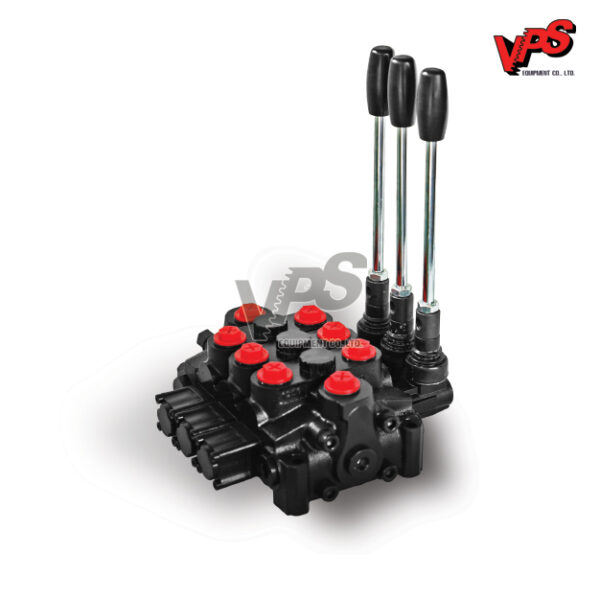
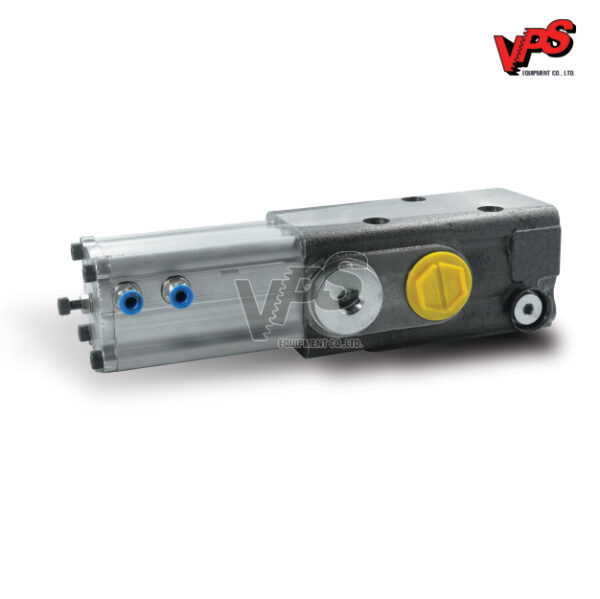
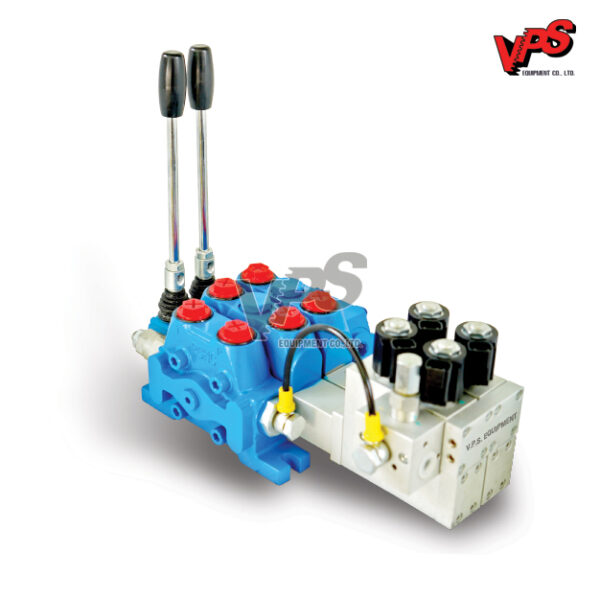
Which one to buy is mostly about where the operator has to stand. Hand levers are fine on a tipper that is loaded from outside; air and electric earn their cost on a crane truck where the operator has to watch the load rather than the valve. Our control valve page compares the three side by side.
What usually goes wrong
- The body will not lift at all. Check that the PTO is engaged before suspecting the valve. If the pump is turning and nothing happens, the relief valve is often set too low, or set correctly and being reached because the load is heavier than the system was built for.
- The body lifts, then settles back down. The spool is not sealing in the middle position, or the cylinder seals are passing. A worn valve will hold a light load and creep under a heavy one.
- The oil gets hot. Nearly always the valve being too small for the pump's flow, or a closed centre valve on a fixed pump, or the PTO being left engaged while the truck drives between jobs.
- The lever moves but nothing does. On air and electric valves the spool itself is usually fine; the fault is in the air line, the solenoid or its wiring. Operate the spool by hand at the valve to find out which half of the system is at fault.
What to send us when you ask for a price
A control valve is matched to the system around it, so these five lines are enough for our team to put a model in front of you:
- The truck and what the body has to do.
- The pump — flow in litres per minute and working pressure in bar, or the pump model if you have it.
- How many functions have to be worked independently.
- Whether you want hand levers, air or electric control.
- The port sizes and hose fittings already on the truck, if it is a replacement.
Frequently Asked Questions
Can I add a spool to the valve later?
On a sectional valve, sometimes — the sections are clamped together with tie rods and a matching section can be added. On a one-piece cast valve, no: the bores are machined into a single body. Buying one spare section at the outset is cheaper than either.
My body rises too slowly. Should I turn up the relief valve?
No. Speed comes from flow, and flow comes from the pump and the engine speed driving it. Raising the relief setting only lets the system push harder on the hoses and the cylinder. If the body is slow, the pump is too small for it or the engine is not being held at the right speed.
How can I tell whether a valve is open centre or closed centre?
It is in the data sheet rather than on the casting, so ask the supplier before buying. As a working rule, a valve sold for a tipper or a truck-mounted crane is open centre, and one sold for a machine with a variable-displacement pump is closed centre. If nobody can tell you, treat that as the answer and buy elsewhere.
Does the valve have to be the same brand as the pump?
No. What has to match is the flow rating, the pressure rating and the port threads. Brand matters for spares and for how long the valve lasts, not for whether it will work with a given pump.
Where should the valve be mounted on the truck?
Somewhere the hose runs are short and the levers can be reached safely from the ground, usually on the chassis rail behind the cab. Short hoses lose less pressure. Keep it clear of the exhaust, and where road spray will not sit on the spool ends.