Choosing a pump for a dump truck sounds like picking a size, but the right pump is the one that matches the body it has to lift, the PTO that turns it and the speed you want the body to tip. Too small, and the driver has to rev the engine hard for a slow lift. Too big, and you pay for flow the cylinder cannot use, with extra heat and fuel burned. This guide takes the decision in the order a workshop would.
Start with the body, not the pump
The pump exists to move one thing: the body. Before opening any catalogue, write down what it has to lift. The cylinder tells you how much oil must be pumped to take the body from flat to full tip, and the loaded weight together with the cylinder size tells you how much pressure the system will see. Everything else follows from those two answers.
What to know before you choose
- The lifting cylinder — bore, stroke and how many stages it has. This sets how much oil one full lift takes.
- The loaded weight — the body plus the heaviest payload it will carry. With the cylinder, this sets the working pressure.
- The lift time you want — a quicker tip needs more flow, and a fully loaded body should not be raised faster than is safe.
- The PTO — its output flange, its rotation direction and how fast it turns compared with the engine.
- The oil tank and the hoses — they have to carry the flow you are about to ask for.
Flow decides how fast the body rises
Lift time is a flow question. The oil needed to extend the cylinder, divided by the time you want the lift to take, gives the flow required. A pump delivers its displacement (the cc it moves each revolution) multiplied by how fast it is turning, so a larger displacement or a higher speed both give more flow.
The pump does not turn at engine speed. It turns at engine speed multiplied by the ratio of the PTO, so check that ratio for your gearbox and PTO, then choose a displacement that gives the flow you need at a comfortable working engine speed — not flat out. If a pump only lifts at a reasonable speed with the throttle pushed hard, it is probably too small.
Pressure decides what it can lift
How heavy a load the body can lift is not set by the pump size. It comes from the pressure in the system and the area of the cylinder, and the relief valve caps that pressure. Check that the pump is rated for the pressure your heaviest body needs, with a margin, and that the relief valve is set as the body maker specifies. For the full picture, see What is a hydraulic pump and how does it work.
Why not simply fit the biggest pump?
A bigger pump lifts faster, not heavier, and the extra flow has to go somewhere. Flow the system cannot use turns into heat and back-pressure, loads the engine and burns fuel. A body that rises or drops too quickly also shock-loads the cylinder, the hoses and the chassis. The control valve, the hoses and the tank all have to be able to carry the flow as well, so a larger pump is rarely a one-part change.
Check the fit before you order
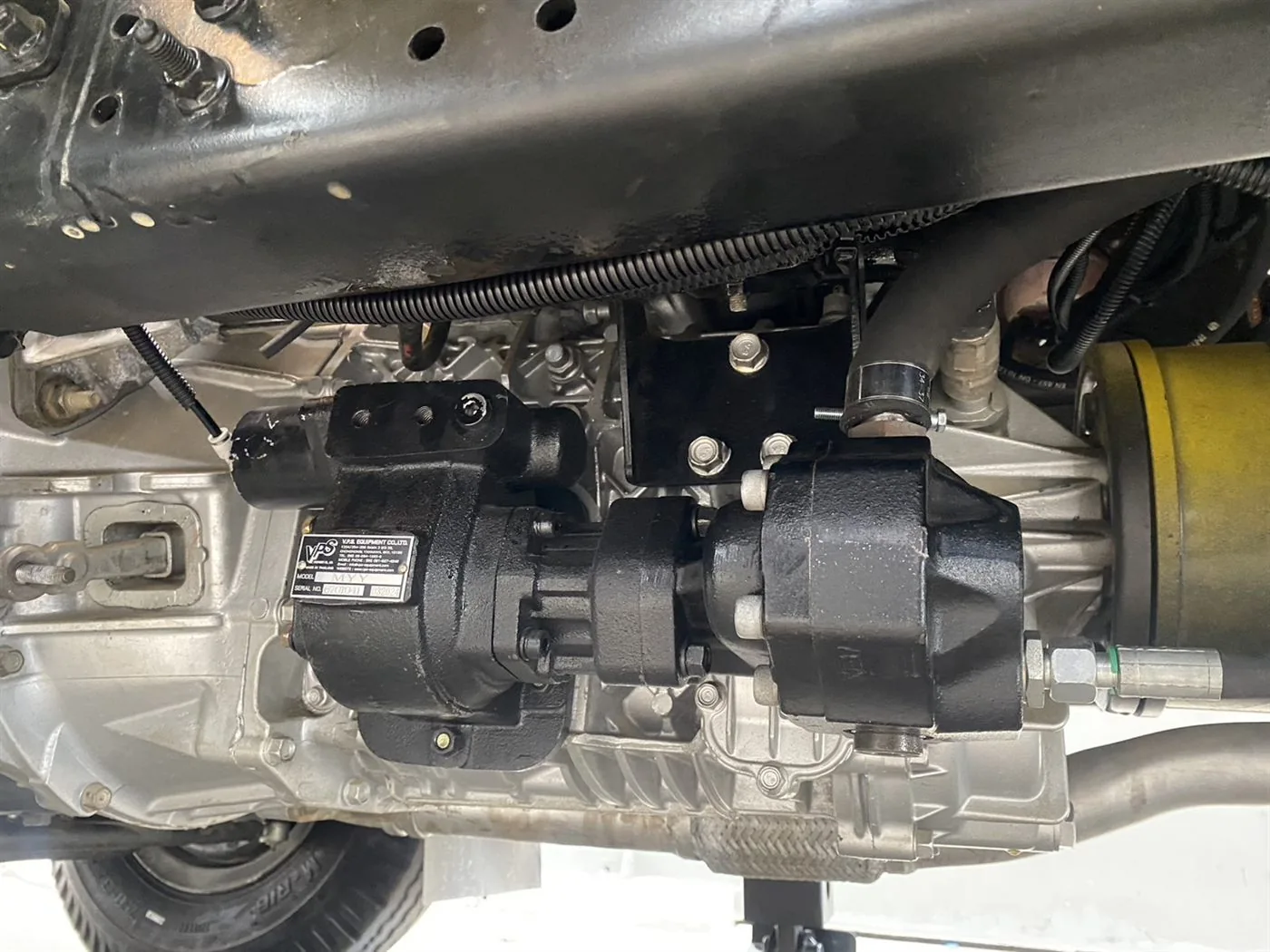
- The mounting flange on the pump matches the PTO output — count the bolts: three is UNI, four is ISO, two is SAE.
- The pump rotates the same way as the PTO output, clockwise or anticlockwise.
- The speed the pump will turn at, given the PTO ratio, stays within the pump’s rated speed.
- Direct mount or remote mount suits the room beside the gearbox.
- The oil tank holds enough for one full lift with a reserve, and the filter is easy to reach.
Common mistakes
- Sizing by guesswork or by copying another truck. Two tippers with different cylinders need different flow, even if the trucks look the same.
- Fitting a bigger pump to cure a slow lift without checking the PTO ratio, the hoses or the filter first — a blocked filter or a tired pump gives the same symptom.
- Ignoring rotation. A pump turned the wrong way will not pump, and can be damaged.
- Forgetting the oil. Even a perfectly sized pump wears quickly on dirty oil — see PTO maintenance.