
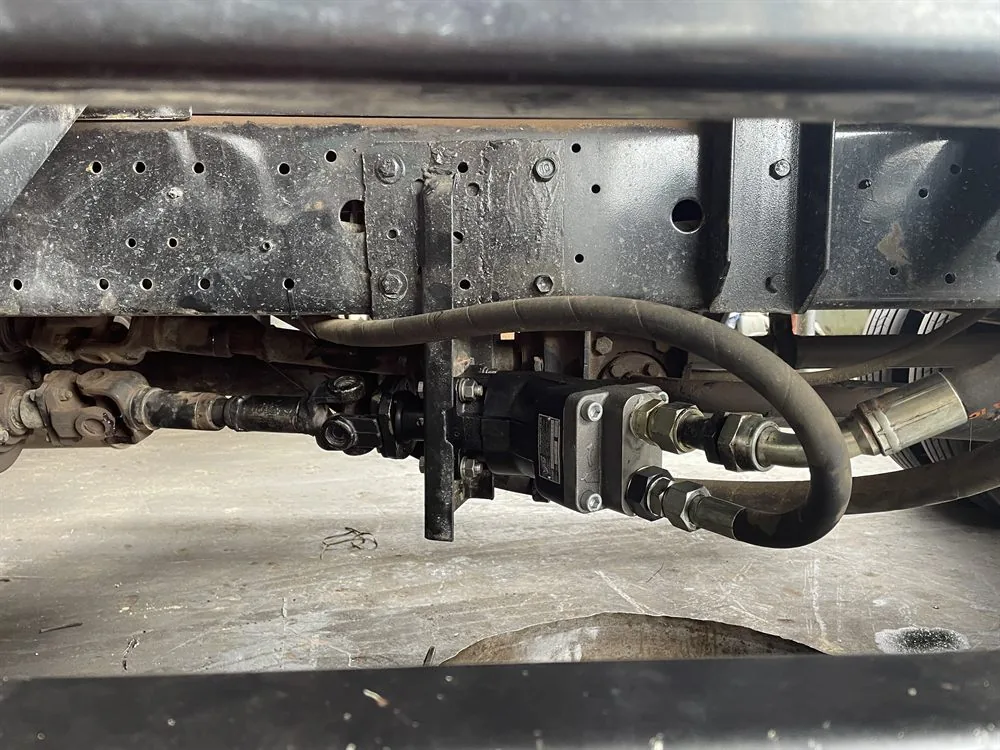
A PTO turns the truck's engine into a power source for something else — a tipping body, a crane, a pump, a mixer drum. That power does not stop at the gearbox. It runs along a driveshaft, into a pump, through hoses at high pressure and into equipment that lifts tonnes. Most PTO accidents are not caused by a broken part; they happen when someone is close to that power at the wrong moment. The checklist below is general good practice for truck-mounted PTOs — follow the manuals for your own PTO and the equipment it drives as well.
Where the danger is
There are three hazards around a working PTO, and each one needs its own habit:
- The turning driveshaft. A shaft that spins smoothly looks harmless, but a sleeve, a glove, a rag or long hair that touches it can be wound in faster than anyone can pull back. Universal joints and exposed bolts make it worse.
- Raised and moving equipment. A tipping body, a crane boom or a hook-lift arm held up by hydraulics can come down if a hose bursts, a valve is knocked or someone lowers it without looking.
- Hydraulic pressure and heat. Oil can stay trapped under pressure in the lines after the pump stops, and a pinhole leak can inject oil through the skin. The oil, the pump and the PTO housing also get hot in use.
Before you engage the PTO
- Park properly. Firm, level ground where you can, parking brake on, and wheel chocks in place when the truck will stand for a while or the ground slopes.
- Follow the engagement procedure for your shift type. Cable, air and electric PTOs each have their own sequence, usually with the truck stationary and the clutch handled correctly. See PTO engagement types if you are unsure which one you have.
- Walk around the truck. Make sure nobody is under the truck, beside the driveshaft or under the body or boom, and that people nearby know you are about to start.
- Check the guards and the shaft. Driveshaft guards in place, no loose bolts, no worn universal joints, no hoses rubbing against the shaft.
- Check the indicator light. If the truck has a PTO indicator on the dashboard, make sure it works — it is often the driver's only reminder that the PTO is still engaged.
While the PTO is running
- Work the controls from a position where moving parts cannot catch you — never reach across or step over a turning driveshaft.
- Keep loose clothing, gloves, rags and long hair well away from the shaft and the pump. Tie hair back and tuck in loose sleeves.
- Use only the engine speed the equipment needs. Over-revving shortens the life of the PTO and can overspeed the pump; an external throttle control holds a steady working speed.
- Do not leave the truck unattended with the PTO engaged and the equipment working.
- Stop at once if you hear a new noise, feel vibration or see a leak, and work through the causes in PTO troubleshooting before you run it again.
Never drive off with the PTO engaged
Unless the PTO and the equipment are specifically designed to work while the truck moves, disengage the PTO before you drive away. A PTO left engaged on the road can overspeed both the PTO and the pump, and it leaves equipment such as a tipping body or a crane under power while the truck is moving. Make a glance at the indicator light part of every departure.
Before you work on the truck or the equipment
- Disengage the PTO, stop the engine and take the key out so nobody can start the truck while you are under it. A tag on the steering wheel helps in a busy workshop.
- Wait until everything has stopped turning. A driveshaft and a pump can keep spinning for a moment after the engine stops.
- Support anything that is raised. Lower the body or boom fully, or hold it with the proper prop or safety stand — never rely on the hydraulics alone to keep it up.
- Release the hydraulic pressure as the equipment manual describes before you loosen a hose or a fitting.
- Let it cool. Give the oil, the pump and the PTO housing time to cool before you touch them.
- Avoid working under a truck alone, and put every guard back before the PTO is used again.
Guards and the driveshaft
A guard only protects anyone while it is on the truck. Guards are often taken off during an installation or a repair and never put back. Any part of the driveshaft that a person can reach — from the side of the truck, from a step or from where they stand to work — should be covered.
The driveshaft itself is part of safety too. A shaft with worn universal joints, a bent tube or poor support vibrates and, in the worst case, can break loose while it spins. Grease the joints and check the shaft along with your regular PTO maintenance.